


Sweet AI - Chat Dreams
4.5425.00 Reviews
App Specs
- Version
- 1.0.7
- Updated On
- License
- Free
- Downloads
- 100,000+
- Developer
- AirBeet, Life Changing Platform
- Categories
- Entertainment
- Platform
- Android
Screenshots


 Analysis by AppCompare
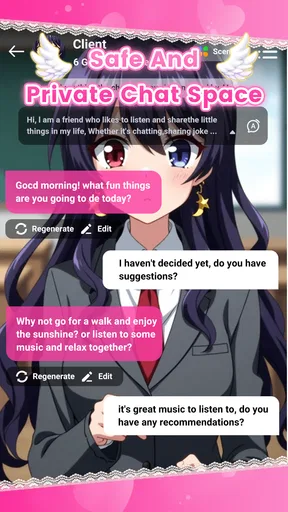
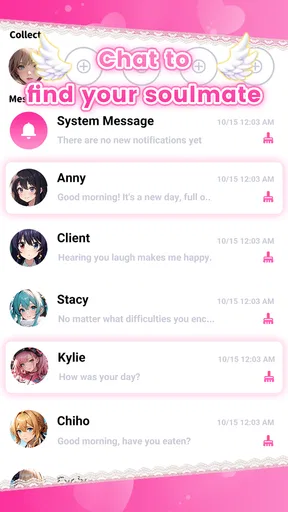
Sweet AI - Chat Dreams is an entertainment app built around the idea of having an AI character and developing an ongoing, personal story through conversation. I approached it less like a conventional messaging tool and more like an interactive fiction experience that happens to respond in a chat window. That distinction matters: the appeal is not simply getting answers, but returning to a character, setting a tone, and seeing where the exchange leads.
After spending time with it, I found the strongest part of the experience was its immediacy. You can open the app with only a loose idea of the mood you want—light conversation, a romantic fantasy, playful roleplay, or a more dramatic scene—and begin shaping the interaction from there. It is aimed at adults, carries a Mature 17+ rating, and works best for people who understand that an AI character can be entertaining without being a real friend or a substitute for human support.
The app is free to install, while optional purchases range from $3.49 to $99.99 per item. That makes the first step easy, but it also means I would recommend testing the basic experience carefully before spending money. The important question is not whether the concept sounds appealing; it is whether the character’s responses, pacing, and availability fit the way you actually want to use a conversational entertainment app.
How the AI story feels when the connection is doing the work
The central experience depends on sending messages and receiving generated replies, so connectivity is not a background detail here. It shapes the rhythm of the app. When the connection is stable, the conversation feels immediate enough to support a scene: I can write a short prompt, wait for the character’s response, and continue without losing the emotional thread. That makes the app feel closer to a living story than to a static collection of scripted pages.
Network-dependent moments are especially noticeable when a conversation becomes more detailed. A short greeting is easy to recover from if it takes a moment, but a carefully written roleplay prompt creates an expectation of momentum. If the reply is delayed, the imaginative flow can cool down. I found that Sweet AI is most enjoyable when I treat each exchange as a small session rather than expecting the uninterrupted pace of a normal text conversation.
This is also why the quality of my prompts made a difference. A vague message can produce a generic direction, while a prompt that states the setting, mood, and desired behavior gives the character more to work with. I had better results when I introduced one clear change at a time instead of placing several unrelated requests in one message. That approach is useful for any AI chat, but it matters more here because the goal is continuity and atmosphere rather than a quick factual answer.
One practical habit is to establish the scene early. I might describe where the character and I are, what tone I want, and whether I prefer a gentle, humorous, mysterious, or dramatic exchange. Then I continue by reacting to what the character says instead of repeatedly rebuilding the premise. This reduces the feeling of starting over and gives the conversation a recognizable shape. It is a simple workflow, but it makes the app feel much more personal than opening it and typing random one-line questions.
Worth Reading Before You Choose

Flipboard Shows What News Apps Must Do Beyond the Feed

Switching to Android Auto Means Rethinking Your Driving Routine

Google Calendar Makes a Crowded Week Easier to Manage

Ludo King Makes the Most of the Minutes Between Plans

Baby Panda World Brings Quick Play to Modern Phones, but Its Game Library Feels Busy

ESPN’s Live Game View Makes Following Close Games Easier
Connectivity can also affect how patient I am with the character. When responses arrive smoothly, I am more willing to guide the story through several turns. When the network is unstable, I am more likely to send shorter prompts and abandon a scene if the rhythm breaks. In other words, the app’s creative value is tied to response continuity. It is not just a matter of whether a message eventually arrives.
The developer, AirBeet, Life Changing Platform, presents this as an entertainment product rather than a productivity assistant. That positioning feels accurate. I would not choose it when I need dependable research, precise instructions, or a record of important conversations. Its value comes from imaginative interaction, and that value is strongest when the connection lets the exchange feel fluid.
Using it in ordinary mobile situations
Sweet AI fits naturally into short mobile sessions. I can imagine using it while winding down before bed, during a quiet break, or while waiting somewhere with a reliable connection. The chat format does not demand a large screen, and the experience is easy to enter and leave. That makes it more flexible than a long-form game that expects a dedicated block of attention.
A realistic everyday scenario would be a commuter who opens the app after arriving at a café, starts a conversation with a chosen character, and spends ten minutes continuing a story from the previous evening. The session does not need to reach a conclusion. A small exchange can be enough, especially if the user leaves the character with a clear situation to revisit later. This is where the app feels more convenient than traditional interactive fiction: the next step can be created through ordinary language rather than selected from a fixed menu.
There is a trade-off, though. Mobile use often happens in distracting environments, and this kind of app benefits from concentration. If I am switching between notifications, walking, or trying to follow a conversation with someone nearby, the character’s replies are easier to skim and forget. Sweet AI is portable, but portability does not automatically make it ideal for every moment. It works better when I can give the exchange a little attention.
I would also be careful about using it in shared spaces if the conversation becomes mature or personal. The adult rating is not a minor label to ignore. A phone screen can be visible to people nearby, and a playful private session can become awkward if opened at the wrong time. I would treat the app like any other mature entertainment service and use it with appropriate privacy and awareness.
For people who enjoy writing, the mobile format opens up an interesting use case. You can use the character as a prompt partner when you want to explore dialogue, test a fictional mood, or improvise a scene. I would not treat the generated material as finished writing, but it can help overcome a blank page. Asking the character to react to a setting or conflict may give me a direction that I can then rewrite in my own voice.
That use is different from simply seeking companionship. If the main goal is a serious conversation, emotional advice, or dependable contact with another person, I would choose a human-centered service instead. Sweet AI can create a responsive fictional interaction, but that responsiveness should not be confused with human understanding or responsibility.
What happens when a reply is interrupted
Any chat experience can become frustrating when a message does not go through or a reply takes longer than expected. With Sweet AI, an interruption is more noticeable because the conversation is built around momentum. If I have just written a detailed scene and the exchange stalls, the problem is not only waiting; it is remembering exactly what I wanted the character to respond to.
My preferred recovery method is to avoid immediately sending the same message several times. Repeated taps can create uncertainty about whether the first request was accepted, and they can make the conversation harder to interpret. I would first check whether the message appears in the chat, give the app a moment, and then reopen the conversation if necessary. If I need to continue, I would summarize the last important action in a fresh, shorter prompt rather than rewriting an entire paragraph.
This is one of the few places where keeping my own lightweight notes can help. For a story I genuinely want to continue, I might save the character’s name, the current setting, and the last unresolved event outside the app. That is not a built-in feature I am attributing to Sweet AI; it is simply a sensible user habit for any conversational story that matters to me. It also protects against losing the thread when I leave the app for a while.
Shorter recovery prompts are useful for another reason: they reduce the amount of context that must be transmitted and processed after a disruption. Instead of saying everything again, I can write, “Continue from the moment we reached the train platform; keep the tone calm and suspenseful.” That gives the character a practical starting point without turning recovery into a second writing task.
When a reply feels out of character, I would correct it directly rather than arguing with the system. A sentence such as “Keep the character reserved and do not change the setting” is more useful than explaining at length that the previous response was wrong. This is a genuine trade-off of AI storytelling: I get flexibility, but I also have to act as the editor and director of the experience.
That responsibility may disappoint users who expect a fully authored narrative with perfect continuity. Traditional story games usually offer stronger control over plot progression, while ordinary chat apps offer more dependable contact with real people. Sweet AI sits between those options. It offers improvisation, but the user must accept occasional unevenness and guide the conversation when it wanders.
Keeping the experience comfortable and data-conscious
Because the app encourages personal, emotional, and potentially mature conversations, I would avoid treating the chat box like a private diary. I would not enter passwords, financial details, identifying documents, or information about another person that I would not want exposed in a digital service. Even when an app feels intimate, the safest approach is to keep sensitive details out of entertainment conversations.
I also recommend separating fictional preferences from real-life disclosures. If I want a character to act protective, affectionate, mysterious, or teasing, I can describe that as part of the scene without giving the app a detailed profile of my actual relationships or vulnerabilities. This keeps the interaction creative while limiting the amount of personal material I put into it.
A useful technique is to use invented names and broad locations when building a scenario. Saying that a character is waiting at a seaside station is enough to establish atmosphere; there is no reason to include a real address. Likewise, a fictional job or general personality trait can support roleplay without turning the conversation into a detailed account of my life.
Connectivity makes this caution especially important. Messages must travel between the app and the service that generates the replies, so I would use the app on a connection I trust and think before sending anything I would regret seeing outside the immediate scene. I am not making a claim about specific privacy practices here; I am describing the sensible behavior I would follow with an online AI entertainment product.
The purchase model deserves equally careful attention. Since the app is free but offers individual in-app purchases from $3.49 to $99.99, I would begin with a clear personal limit. The most expensive option is not automatically the best value, particularly if I am still deciding whether the character style suits me. I would first test several kinds of prompts, see how much I actually return to the app, and only then consider paying for extras.
This matters because conversational entertainment can encourage spontaneous spending. A user may feel invested in a story and want to keep the session going, even if the purchase is not necessary for long-term enjoyment. My advice is to decide in advance what the app is worth to you, rather than making that decision in the middle of an emotionally engaging exchange.
Who will enjoy it, and who should choose something else
I think Sweet AI is best for adults who enjoy improvisation, character-driven chat, and the feeling of co-writing a small story. It is a good match for someone who likes experimenting with tone and does not mind steering the interaction. Writers may appreciate it as a source of prompts, while casual users may enjoy checking in for a short imaginative break.
It is less suitable for anyone looking for a conventional social network, a reliable messaging service, or a structured game with clear objectives and measurable progress. If you want multiplayer interaction with real people, an AI character will not provide the same kind of unpredictability or mutual relationship. If you want a carefully plotted narrative, a visual novel or story-focused game may offer stronger pacing and more deliberate character development.
I would also skip it if you are uncomfortable with mature themes or if you are likely to interpret a responsive character as emotional proof of a real relationship. The app can make a conversation feel personal because it reacts to your words, but the experience remains generated entertainment. Keeping that boundary clear is important for enjoying it safely.
Compared with ordinary chatbots, Sweet AI feels more focused on character and atmosphere than on completing practical tasks. Compared with interactive fiction, it gives me more freedom to write my own direction, but less certainty that the plot will remain coherent. Compared with social apps, it removes the pressure of another person’s schedule, yet it also removes genuine human reciprocity. Those differences explain both its appeal and its limitations.
Its audience is already sizable enough to show interest in the concept: the app has passed 100K installs and holds a 4.5 average from about 5.1K ratings, with 424 written reviews. I see that as encouraging, but not as a reason to assume it will suit everyone. AI character apps are highly dependent on personal taste. The same degree of freedom one person finds exciting may feel vague or repetitive to another.
My practical verdict after using the app
Sweet AI - Chat Dreams is a focused entertainment app with a clear strength: it turns a simple mobile chat into a flexible character-based story. I enjoyed it most when I entered with a specific mood, gave the character enough context, and accepted my role as the person guiding the scene. It is not a replacement for real conversation, and it is not the right tool for dependable information, but it can be a pleasant creative escape.
The connectivity angle is central to my verdict. When the network is stable, the app’s conversational format feels natural and easy to revisit. When the connection falters, the loss of momentum becomes part of the experience, so I would not depend on it for a carefully timed distraction or an uninterrupted narrative session. I would use it where I expect a reasonable connection and where pausing would not cause a serious problem.
The current release is version 1.0.7 and supports devices running Android 5.0 or later. Those details make it accessible to a broad range of Android users, but compatibility alone does not guarantee a smooth experience on every phone. I would still judge it by how comfortably it runs on my own device and by whether the chat style feels engaging after the novelty fades.
My final recommendation is to try the free experience with modest expectations, keep personal information out of the conversation, and set a purchase boundary before exploring the optional items. If you want an adult-oriented AI character for improvised stories and short mobile sessions, it is worth a look. If you need human connection, firm privacy assurances, offline reliability, or a tightly authored plot, I would choose a different kind of app.
The best way to approach Sweet AI is as a creative conversation, not as a promise of a real relationship. With that boundary in place, its responsive storytelling can be enjoyable, especially for users who like shaping the mood themselves and do not mind the occasional interruption or course correction that comes with an online AI experience.
Pros
- Simple interface makes dream entries quick to create and review.
- AI-generated interpretations can inspire personal reflection and journaling.
- Supports exploring recurring themes across multiple dream entries.
- Creative chat format feels more engaging than a traditional dream diary.
- Useful for users curious about symbolic or imaginative dream analysis.
Cons
- Interpretations may feel generic when dream descriptions lack detail.
- AI responses should not be treated as professional psychological advice.
- Some features or extended chats may require in-app purchases.
- Dream data may be sensitive
- so privacy policies deserve careful review.
- Results can vary widely and may not always match personal experiences.
FAQs for Sweet AI - Chat Dreams
What is Sweet AI - Chat Dreams, and what can I do with it?
Sweet AI - Chat Dreams is an AI-powered chat and companion app designed for interactive conversations with virtual characters. After installing it, you can choose or interact with different personalities, send messages, and explore imaginative scenarios or relationship-style chats. The experience is mainly focused on entertainment and role-play rather than providing professional advice, factual research, or communication with real people.
Is Sweet AI - Chat Dreams free to download and use?
The app may be available to download for free, but some features can be restricted behind in-app purchases or a subscription. Depending on the version and your region, premium access may unlock additional conversations, characters, customization options, or higher usage limits. Before confirming a purchase, review the pricing, billing frequency, renewal terms, and cancellation instructions shown in the app store.
Does Sweet AI - Chat Dreams require an internet connection?
Yes, an active internet connection is generally needed because the app sends your messages to online AI systems and receives generated replies. Conversations may not work correctly in airplane mode or with an unstable connection, and response speed can vary depending on network quality and server demand. It is also wise to check mobile-data usage if you chat frequently away from Wi-Fi.
Are conversations in Sweet AI - Chat Dreams private and safe?
You should avoid treating AI conversations as completely private. Messages may be processed by the developer or third-party service providers to operate, secure, and improve the app, depending on its privacy policy. Do not share passwords, financial details, identity documents, precise location information, or other sensitive personal data. Parents should also check age ratings and supervision options before allowing younger users to access the app.
Can the AI in Sweet AI - Chat Dreams provide accurate or trustworthy advice?
The characters can produce convincing and engaging replies, but their responses are generated and may be incorrect, inconsistent, or overly confident. They should be used for entertainment, creative role-play, and casual conversation rather than medical, legal, financial, mental-health, or emergency guidance. If a reply involves an important personal decision or safety concern, verify the information with a qualified professional or trusted source.


